Supported Independent Living (SIL) and Specialist Disability Accommodation (SDA) are key terms used within the NDIS to describe essential accommodation supports for people living with disability. Although these terms are often mentioned together, they represent different types of funding and services that work hand in hand to help individuals live independently.
SIL and SDA are separate terms coined by the National Disability Insurance Agency (NDIS) to describe funding streams that support NDIS participants, often delivered in tandem.
Think of Supported Independent Living (SIL) as the ‘how’—the daily supports that enable independence—and Specialist Disability Accommodation (SDA) as the ‘home’ —accessible housing designed for people with high support needs.
What is SIL accommodation and SDA, and how do they work together? In this blog, we explain the differences, how each support is funded, and what participants and families need to consider when planning long-term living arrangements.
What is Supported Independent Living (SIL)?
What is SIL accommodation, and how does it work? Supported Independent Living (SIL) is an NDIS-funded support that helps people with disability live as independently as possible while receiving regular daily assistance. SIL funds the support workers who assist you in your home; it does not fund the property itself.
The purpose of Supported Independent Living is in the name: to provide structured, consistent support in an accommodation setting so participants can:
- Develop everyday living skills
- Maintain personal safety
- Participate in their community
- Build long-term independence
What does SIL support include?
24/7 SIL supports vary depending on individual needs, but may include:
- Assistance with daily living tasks such as showering and dressing
- Meal preparation and support with nutrition
- Medication management
- Household tasks such as cleaning and laundry
- Support to attend appointments
- Community access
- Health and wellbeing support
- Support for behavioural needs
- Overnight supervision or active night support
Where is SIL delivered?
SIL is most commonly delivered in shared accommodation with other NDIS participants. In these arrangements each person usually has their own bedroom, common areas are shared and a roster of care outlines when support is provided.
However, SIL can also be delivered in a private or family home if assessed as reasonable and necessary. The type and intensity of support depend on functional capacity, safety considerations and individual goals.
Who is SIL for?
SIL is typically funded for participants who:
- Require regular daily assistance
- Cannot live independently without structured support
- Benefit from shared support arrangements
- Need ongoing supervision to maintain safety
SIL is about building independence over time, not simply providing care.
What is Specialist Disability Accommodation (SDA)?
Specialist Disability Accommodation (SDA) refers to homes fitted with accessible and innovative features that help residents live more independently and safely. SDA funding is designed for people with high support needs and functional impairment.
Unlike SIL, SDA does not fund daily support workers. It funds the physical housing itself. This distinction is central when understanding the difference between SDA and SIL.
SDA is considered a capital support within an NDIS plan. It is intended to provide long-term housing that matches a participant’s functional needs where standard housing would not be suitable.
What does SDA include?
SDA includes purpose-built or modified homes that meet strict NDIS design standards. These homes are constructed to improve accessibility, reduce risk and enable support to be delivered safely.
There are four main SDA design categories:
- Improved Livability: Accessible home features for people with intellectual, cognitive and sensory impairment. This may include enhanced wayfinding, visual contrast features and layouts that improve usability.
- Robust: Highly resilient homes with features such as secure windows and high impact fittings. These homes are designed to support participants with complex behavioural needs while maintaining safety for residents and support workers.
- Fully Accessible: Homes with high level of physical support for people with significant functional impairment. Features may include step-free access, wider doorways, accessible bathrooms and wheelchair circulation
- High Physical Support: Similar to Fully Accessible, but including features such as structural provisions for ceiling hoists, voice control assistance and emergency power solutions.
SDA funding covers the cost of these specialised design elements. It does not cover support services, personal care or daily assistance. This forms part of the difference between SDA and SIL, as the two funding streams address separate needs within an accommodation setting.
Where is SDA delivered?
SDA is delivered in enrolled SDA dwellings that meet NDIS requirements. These properties may include:
- Shared homes with other NDIS participants
- Apartments within purpose-built complexes
- Standalone houses designed for individual occupancy
Participants approved for SDA can choose from available SDA housing that aligns with their funding category and personal preferences. SDA housing can operate alongside Supported Independent Living supports, but it can also accommodate other support models depending on individual needs.
Who is SDA for?
SDA is intended for a small percentage of NDIS participants who have profound functional impairment or very high support needs that cannot be met in standard housing. This highlights the difference between SDA and SIL, with SDA focused on the built environment and SIL focused on the supports delivered within it.
To be approved for SDA, participants must provide substantial evidence demonstrating that:
- Their current housing is not suitable long-term.
- Modifications to standard housing would not reasonably meet their needs
- Specialised housing will improve safety, independence and support delivery
This typically involves assessments from allied health professionals and formal evidence submitted to the NDIS.
SIL vs SDA: What’s the difference?
Now that we’ve explained each support individually, it becomes easier to understand SIL vs SDA.
| Feature | Supported Independent Living (SIL) | Specialist Disability Accommodation (SDA) |
| What it funds | Daily support workers | The specialised property |
| Funding category | Core Supports | Capital Supports |
| Purpose | Provide daily assistance and build independence | Provide accessible, purpose-built housing |
| Eligibility basis | Level of daily support required | Profound functional impairment or very high support needs |
| Can be delivered in standard housing? | Yes | No |
| Often used together? | Yes | Yes |
When are SIL and SDA funded together?
Although SIL and SDA are separate funding streams, they are often funded together when a participant requires both specialised housing and ongoing daily support.
This typically occurs when a person:
- Requires 24-hour assistance or overnight supervision
- Needs accessible housing features that cannot be reasonably provided in standard accommodation
- Has significant physical impairment or complex behavioural support needs
In these situations, SDA funds the purpose-built or modified home, while SIL funds the structured support roster delivered within that home. Approval for one does not automatically result in approval for the other. Housing requirements and daily support needs are assessed independently, which is an important part of navigating SIL vs SDA under the NDIS.
How are SIL and SDA approved?
SIL and SDA are assessed separately within an NDIS plan. Although they are often discussed together, the approval process for each funding stream is different.
SIL approval process
Supported Independent Living is funded under Core Supports – Assistance with Daily Life. To approve SIL funding, the NDIS must determine that:
- The participant requires regular, ongoing daily support
- A supported living arrangement is reasonable and necessary
- The level of support requested reflects assessed functional need
Approval is based on supporting evidence. This typically includes a functional capacity assessment and allied health reports outlining daily support requirements. A support needs assessment details the number of hours required and whether specific staffing ratios or overnight support are necessary.
A proposed roster of care is usually prepared to show how support will be delivered throughout the week. The NDIS reviews this documentation to determine whether the requested SIL funding meets the reasonable and necessary criteria within the participant’s plan.
How is SDA approved?
SDA is funded under Capital Supports and has a higher approval threshold than SIL. Since the SDA funds specialised housing, the NDIS must determine that:
- The participant has profound functional impairment or very high support needs
- Standard housing or home modifications would not be sufficient
- SDA represents a reasonable and necessary long-term solution
Approval requires detailed supporting documentation, including comprehensive allied health assessments and a formal SDA Evidence of Need report explaining why specialised housing is required. Housing suitability and risk assessments may also be submitted to demonstrate that standard accommodation would not meet the participant’s needs safely or effectively.
The NDIS considers whether the participant’s needs are ongoing and whether specialised housing will improve safety, independence or support delivery. As capital funding, SDA has a higher evidentiary threshold and approval timeframes may be longer.
Timeframes and planning considerations
The approval process for SIL or SDA can take several months, particularly for SDA. Participants may need to gather supporting reports, attend planning or review meetings and submit formal evidence through their Support Coordinator. Because SDA approvals are limited to participants who meet strict criteria, early planning is important.
Know the difference between SDA and SIL to help avoid delays caused by incomplete documentation or incorrect funding assumptions.
Transitioning into SIL vs SDA
Moving into Supported Independent Living (SIL) or Specialist Disability Accommodation (SDA) is a significant step. It is a transition in support structure, daily routines and long-term living arrangements. Whether a participant is approved for SIL, SDA or both, the transition process involves planning, coordination and time.
Moving into Supported Independent Living
For participants approved for SIL, the priority is establishing the appropriate level of daily support within a suitable living arrangement. The transition process usually involves confirming the approved supports in the NDIS plan and developing a roster of care that outlines when assistance will be delivered, including any overnight supervision.
In shared accommodation, compatibility between housemates is carefully considered. Alignment in routines, communication styles and support needs ensures long-term stability.
Transitions may be gradual, with trial stays or staged increases in support hours used to confirm the arrangement is appropriate before a permanent move.
Moving into Specialist Disability Accommodation
Transitioning into SDA involves additional housing considerations. Once funding is approved, participants confirm their design category and explore enrolled SDA properties that meet their functional requirements.
The process may include reviewing tenancy agreements, understanding rental contributions and coordinating support providers to align with the new housing environment.
As SDA properties are specialised and limited in availability, identifying a suitable vacancy can take time. Location, accessibility features and potential housemate arrangements are all considered before a move is confirmed.
Coordinating housing and support together
When a participant is approved for both SIL and SDA, the housing arrangement and support structure must be carefully aligned. The physical environment needs to support the approved level of daily assistance, including staffing models, support ratios and accessibility requirements.
In practice, navigating SIL vs SDA often involves coordination between housing providers, support providers and Support Coordinators to align move-in timelines, rosters and tenancy agreements. A well-planned approach reduces disruption and helps establish long-term stability from the outset.
A real-world example of SIL and SDA in practice: Brad’s Story
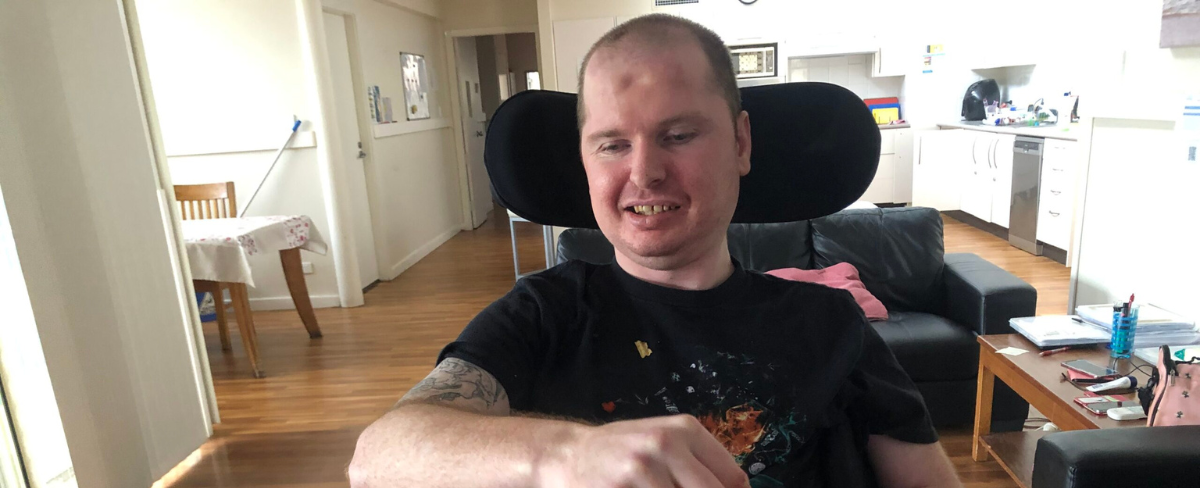
About 5 years ago, I had an accident which changed my life, leaving me non-verbal and with a brain injury. After the recovery process I lived at home by myself, supported by Support Workers. I was lonely, not reaching my goals and having a really difficult time. After connecting with Ability Options SIL and SDA services I was able to rebuild my life. I worked with physiotherapists to improve my strength and communication, allowing me to start doing the things I love again. Now, I am learning to steer and control my wheelchair myself and get out in the community with my Support Workers so I can meet people my age and make new friends.
Quick FAQs
- What is the difference between SIL vs SDA?
SIL provides daily support services, while SDA refers to accessible housing designed for individuals with high needs. - Who is eligible for SIL and SDA funding?
SIL and SDA funding are available to NDIS participants with assessed needs. An Allied Health Professional will conduct a functional assessment to determine eligibility. - What types of supports are included in SIL services?
SIL services include assistance with daily living tasks like cooking, cleaning, and personal care, as well as support for health and wellbeing, community access, life skills development, and managing behavioral needs. - Can I access SIL services without living in an SDA home?
Yes, SIL services can be provided in a family home, private residence, or other non-SDA shared home settings. However, many NDIS participants choose to access SIL in shared homes or SDA homes for additional support and community engagement. - How long does it take to access SDA housing?
The process of applying for SDA funding and transitioning into a home can take up to 12 months. This involves a functional assessment, eligibility determination, and finding the right housing option to meet your needs.
Getting Started
To access Supported Independent Living (SIL) or Specialist Disability Accommodation (SDA) services through providers like Ability Options, you’ll need a NDIS Plan that includes funding for SIL or SIL + SDA.
- Supported Independent Living is funded under Core Supports – Assistance with Daily Life
- Specialist Disability Accommodation is funded as a Capital Support
To determine your eligibility, an Allied Health Professional will undertake a functional assessment.
Applying for SIL/SDA can take time, so if you don’t have these funding streams, it is a good idea to start engaging with your Local Area Coordinator and Support Coordinator.
Why Choose Ability Options?
At Ability Options, supporting people living with disability is at the heart of everything we do. As a recognised sector leader in disability accommodation services and Registered NDIS Provider, we’re committed to empowering you. Our expertly trained teams deliver superior quality of life outcomes, supported by robust best practice frameworks.
We will guide you and help you to access and transition into SIL and SDA services, creating a lifestyle where you feel at home.
If you have SIL or SIL + SDA funding in your NDIS Plan, contact one of our friendly Accommodation Occupancy Coordinators today or check out our available supported living homes.