
Change doesn’t always arrive neatly or on your timeline. A move, a delay or an unexpected shift can turn housing into a big question mark. Having a safe, supportive place to stay can bring calm during uncertainty and give you space to plan what’s next.
If you’re transitioning between housing options or waiting for a more permanent solution to become available, NDIS Medium-Term Accommodation (MTA) could be exactly what you need.
In this guide, we explain what Medium-Term Accommodation is, who it’s for and how it can support you.
What Is Medium-Term Accommodation?
Medium-Term Accommodation (MTA) is a type of transitional or temporary housing support funded by the NDIS for eligible participants who need somewhere safe and supportive to live while they wait for their long-term home to be ready.
It’s designed to fill the gap — not as a forever home, but as a secure and accessible stepping stone. The NDIS will typically fund MTA for up to 90 days.
To be eligible for NDIS Medium-Term Accommodation, participants usually have a home they will move into and require somewhere supportive to live in the medium term.
Are You Eligible for MTA?
To get the NDIS Medium-Term Accommodation, you must:
1. Have a future home
You have a long‑term home you will move into. This might be social housing, private rental or Specialist Disability Accommodation (SDA).
2. Have a disability‑related barrier
You cannot move into your long‑term home yet because something is not ready. For example:
- Your disability supports (such as Supported Independent Living — SIL) are not in place yet.
- Your home still needs disability‑related changes or modifications.
3. Need somewhere safe to stay temporarily
You cannot stay in your current place while you wait for your long‑term home to be ready.
Why MTA Is Used
MTA provides a safe, supportive place to live for a short time until your long‑term home is ready.
Who Is MTA For?
MTA is ideal for NDIS participants who:
- Are waiting for Specialist Disability Accommodation (SDA) to be built or become available
- Need temporary accommodation following hospital discharge while they wait for their long-term housing solution
- Are in crisis or unsafe living situations and need interim support
- Have been approved for Supported Independent Living (SIL) and are transitioning into or between SIL home arrangements
MTA homes can provide participants with the stability they need during periods of transition, ensuring their daily support continues without interruption.
What’s Included in MTA?
While MTA covers the cost of housing only, other supports like daily personal care, meals or community access are funded separately through other areas of your NDIS plan.
Typically, MTA includes:
- A fully accessible, furnished accommodation (does not include specialised equipment [e.g., hospital bed]).
- Secure and comfortable home environment
- Location close to essential services (e.g. shopping, hospital, transport)
How Long Can You Stay in MTA?
NDIS Medium-Term Accommodation is usually funded for up to 90 days, or roughly three months. In some situations, plans can take longer than expected. If there are significant delays outside your control, such as construction setbacks or support services not being ready, the NDIS may consider extending MTA. However, any extension needs to be supported by clear evidence that explains why more time is needed. Throughout your stay, the focus remains on helping you move confidently towards your long-term housing solution.
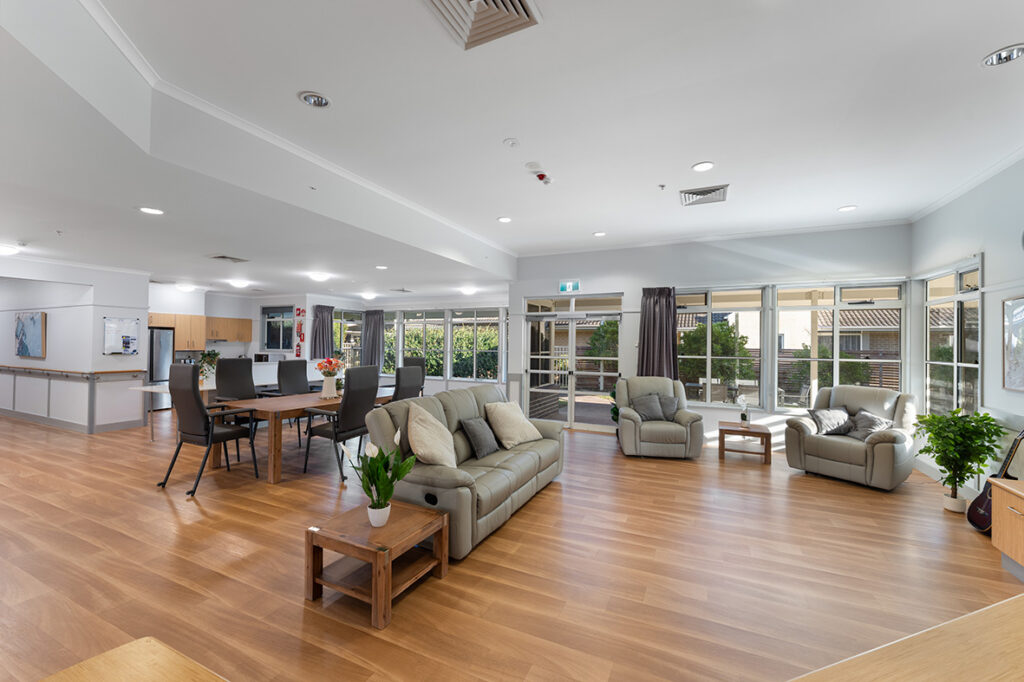
Need a place that feels like home while you transition?
Jacaranda House at Hamlyn Terrace, Central Coast provides Medium Term Accommodation that feels like home.
How to Access NDIS Medium-Term Accommodation
To access MTA, you must have the support item included in your NDIS plan.
Here’s how to get started:
- Talk to your Support Coordinator or NDIS Local Area Coordinator (LAC) about your transitional accommodation needs.
- Provide evidence or reports that show your need for temporary accommodation. This could be a letter from hospital, service provider or NDIS Planner.
- Work with a provider like Ability Options to identify a suitable MTA arrangement that meets your needs.
How to Choose the Right NDIS Medium-Term Accommodation
Here are a few things to think about when exploring MTA options:
- Accessibility and safety
The accommodation should match your physical and support needs so you can move around comfortably and safely. This might include step-free access, accessible bathrooms, space for mobility equipment or features that support your independence.
- Continuity of supports
It’s important to check that the support you need can continue while you’re in MTA. This helps ensure your day-to-day life stays as consistent as possible.
- Length of stay and flexibility
MTA is medium-term, but plans don’t always run exactly to schedule. Make sure the accommodation can support you for the full approved period and you have clear transition plans in place to ease uncertainty and reduce stress.
We’re Here to Help
At Ability Options, we understand how to navigate the complexity of NDIS accommodation supports. We collaborate with you, your family and carers to ensure a positive experience during your transition.
We provide safe, high-quality Medium-Term Accommodation tailored to support your needs, with every part of your stay guided by your goals.
Conveniently located on the NSW Central Coast, our Jacaranda House offers a tranquil environment where you can feel settled as you plan your next step. Reserved exclusively for Medium-Term Accommodation, Jacaranda House supports up to five people at a time. This smaller setting allows for personalised, person-centred support, alongside access to clinical care. Our MTA service also includes:
- Comprehensive transition support — An Ability Options Occupancy Coordinator works alongside you, your family and your support network to understand your needs and guide you through each stage of your stay.
- Tailored care — Skilled support workers are available around the clock to support access to GP and clinical supports when needed, helping you maintain independence and confidence.
- Guidance beyond MTA — While you’re with us, we help put plans in place for your next home. This includes exploring longer-term housing options and supporting a connected move into Supported Independent Living (SIL) or Specialist Disability Accommodation (SDA) where appropriate.
Whether you need medium-term accommodation, short-term respite or longer-term care, Ability Options can help. We take an inclusive, person-centred approach in everything we do. That means listening, respecting choices and working alongside you and your circle of support to achieve your goals.
Reach out to our team to learn more and see how we can help you get started!