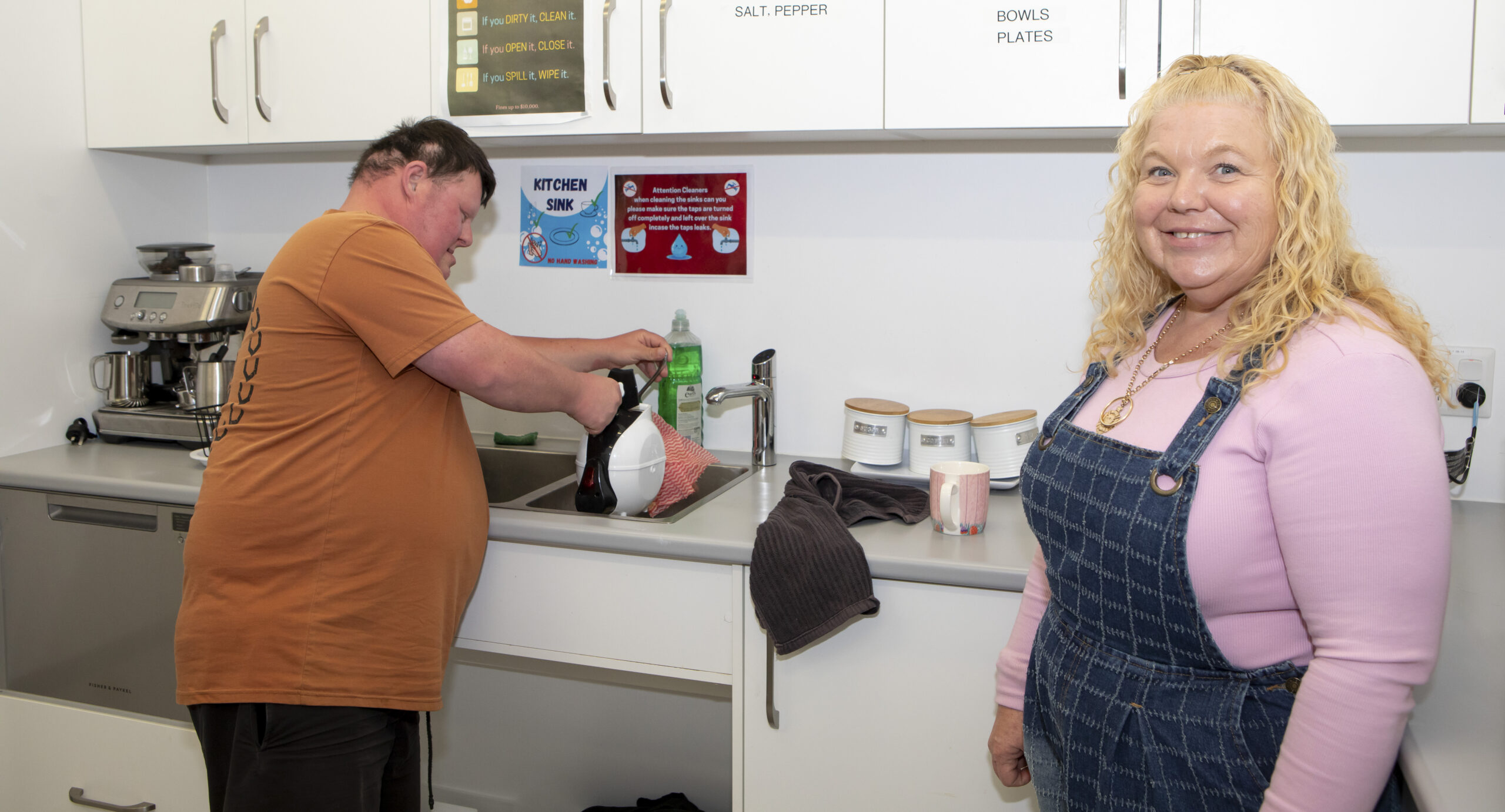
Supported Independent Living and the NDIS
Supported Independent Living (SIL) is an NDIS-funded support for people who need help with everyday tasks and want to develop their skills and independence while living in the community.
SIL is generally for people who need regular support with things like getting dressed, showering, preparing meals, managing household tasks or building their daily living skills. It is most commonly provided in shared accommodation, where people have their own space while sharing a home with others.
SIL funding covers the support you receive, rather than the cost of your accommodation. Support workers can be there to provide practical assistance, help you learn new skills and support you to make choices about how you want to live.
With the right supports in place, SIL can help you build greater independence, develop confidence in your everyday skills and live a life that reflects your goals and choices.
What is Supported Independent Living?
Supported Independent Living services provide support that develops the skills and independence of a person while living in the community.
This could include:
- Support for day-to-day life tasks, such as cooking, personal care and medication management
- Capacity-building initiatives while living in the community, including support with managing finances and developing budgeting skills, building better social and communication skills, and support with daily household tasks
Who can receive SIL supports?
NDIS scheme participants can apply for Supported Independent Living services under their NDIS plan, which forms a part of their funding arrangements. This means the NDIS will pay for Support Workers to come and support participants in their home.
Supported Independent Living funding needs to be planned and approved. The process involves working with a National Disability Insurance Agency (NDIA) planner and a NDIS local area coordinator to identify if supported living arrangements are appropriate for you.
To find the right services, you can receive help from a support coordinator, or alternatively, you can research service providers yourself.
When might SIL be an option?
You might consider Supported Independent Living if your goal is to become more independent in an accommodation setting, while still accessing supports each day.
An example of this may be, when your current living arrangements are not suited or safe for you due to your disability, things like: being able to access the kitchen or toilet, cook meals or manage medications. Living in a shared living arrangement may enable a higher quality of life and be more suited to your needs.
Who pays for SIL?
The NDIS cover the costs of Support Workers through Supported Independent Living funding, this provides (SIL) approved NDIS scheme participants with the support they need relating to daily life through their NDIS plan. It must meet the NDIS funding criteria that the assistance is reasonable and necessary.
You need to be aware that Supported Independent Living funding does not cover the costs of things like food, electricity, clothing, rent or mortgage payments, it also does not cover the costs of assisting you to find a home.
If you need extra assistance for these areas, States and territories are responsible for social and affordable housing. Depending on where you live, there may be waiting times involved for this type of accommodation. The Australian Government funds the Disability Support Pension, including Commonwealth Rent Assistance to help with the cost of renting and utilities.
How does Supported Independent Living work?
Working with a Supported Independent Living service provider, together you will create a roster of care to determine what help you need and when you need it. It will outline the different supports, and how and when it will be provided. Generally, the roster is written in half-hour blocks. The roster will also set out the type and ratio of support and the pricing. Once everything is approved by you and the NDIS, you can engage a service provider.
How much does SIL cost?
Supported Independent Living costs are paid by the NDIS for people living with disability who are approved for the services. The NDIS operates under a regulated set of pricing arrangements and price limits that determine the level of payment for each service. Service providers are subject to strict guidelines for their support and claims.
Supported Independent Living providers
There are SIL providers around Australia who can help people living with a disability to increase independence in their own home.
Established SIL, such as Ability Options, are experienced in assisting people to live independently, and create a home that is uniquely yours. Our vision is to work with you to find somewhere that is more than a home and live a life that you choose.
We’ve supported many people living with disabilities to lead happy, healthy, independent lives. Let us work with you to create your own home through Supported Independent Living.
Our mission is to support people who need assistance to achieve their aspirations and inclusion in the community. We are a NDIS Registered Provider of Supported Independent Living services, make an enquiry to connect to one of our helpful consultants.